
Please find the Chinese Version at [Chinese] Review of Boat people: A 50-Year Journey
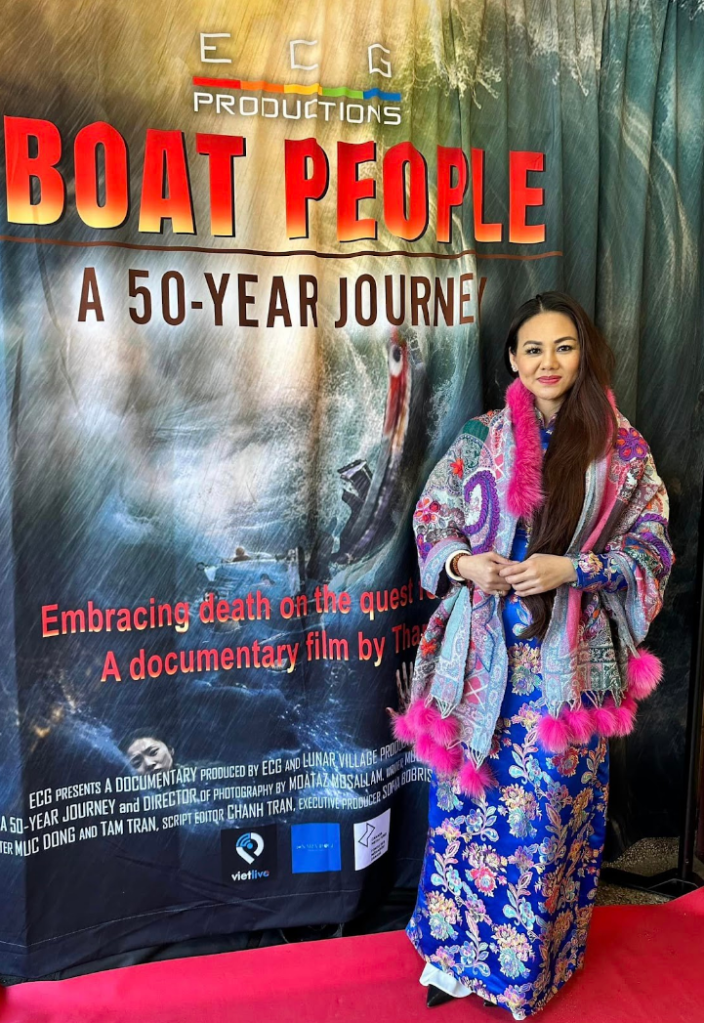
In light of the 50th anniversary of the Fall of Saigon, director Thanh Tam’s new documentary film, Boat People: A 50-Year Journey, made its debut in Toronto and will screen in cities around the world.
The film details several personal accounts of Vietnamese boat people, refugees who made a new home in Canada. They left Vietnam by sea in small fishing boats after the communist government of North Vietnam took over the city of Saigon in 1975, the capital of South Vietnam, effectively ending the Vietnam War.
The idea of making a documentary about the boat people had been in the works for years. It took two whole years of filming to bring the movie to life. The inspiration was drawn from Tam’s family. “My husband is one of those boat people and he would often share stories about drifting in the sea,” Tam said. “Then one day our daughter was tasked with homework to learn about the roots of her parents. She also started to wonder why there are two different types of Vietnamese flags.” Tam, a popular host of Vietnamese news programs in Toronto, thought the best way to answer those questions was through the lens.
The film starts by detailing the driving force behind the unprecedented mass exodus, and depicts what post-war life is like for the boat people and their descendants. After communism took over the country, many innocent citizens, especially men, were imprisoned and tortured. They left behind wives and young children, who could barely make a living under the authoritarian regime. Many families were left with only one option for the future- to flee the country. Most of them had to escape in the middle of the night with no time to say goodbye to their families. They bowed to their homeland before boarding small boats, and unfortunately, it became the very last time some would step foot in their country or origin.
The film touches on chilling and compelling stories that were rarely told before by the interviewees. The stories were often hidden deep inside them as a coping mechanism of the trauma they went through. It took a great deal of determination and compassion for Tam to convince them to open up. “One of the ladies we interviewed lives in Paris,” Tam said. “I talked to her for a whole week before she finally agreed to share her story with us. To finish the shooting, we had to fly back and forth between Toronto and Paris. But it all paid off eventually.”

Asked who should see the film, Tam thinks it should not be restricted to the Vietnamese communities who should never forget about their origins. The film also serves as a chance for Tam to pay tribute to the Canadians who had welcomed and helped thousands of Vietnamese refugees. Canadian military personnel, regular citizens, and non-profit organizations came together to provide support for the newly landed refugees to settle down and find employment.
Canada has long been a leader in enacting humanitarian policies. In 1986, the United Nations presented the UNHCR’s Nansen Refugee Award to “the people of Canada” through then Governor General Jeanne Sauvé. The award recognizes the work of Canada in helping to alleviate the very difficult situations of refugees around the world.
“But we must remember that war has not ended,” Tam added. “Many people are still suffering in war-torn countries and territories. Refugees and displaced peoples remain a big concern today.”
The film unveils the tremendous sacrifices the boat people made, by leaving their country and families behind, in the quest for freedom and a brighter future for the next generation. To avoid being detected, they had to hide themselves among piles of people crammed in small fishing boats, often 6 feet wide and 40 feet long. They suffered from terror, starvation, and sickness due to attacks from pirates, lack of food, clothing, and medical care. The harsh conditions would take the lives of many children who couldn’t survive the difficult journey.
The number of Vietnamese boat people who died at sea can only be estimated. According to the United Nations High Commission for Refugees, between 200,000 and 600,000 boat people died at sea, among the roughly two million Vietnamese who fled the country by boat.
The film earned positive reactions among the many boat people at the Toronto screening. For many, it served as a memoir of their own stories. For others, it offers closure for the sacrifice and pain they were bearing for years.
As years have passed by, many of the boat people in the film are now Canadian citizens. Several stated that they miss Vietnam as much as they love Canada. An interviewee talked about a moment when he first landed in Canada to express his everlasting love to his home country. When he first arrived in Canada, he was granted a landing certificate at the security checkpoint at customs, where it marked his nationality as stateless. He asked himself, “I am from Vietnam. My home is there. Why does it say I’m stateless?”
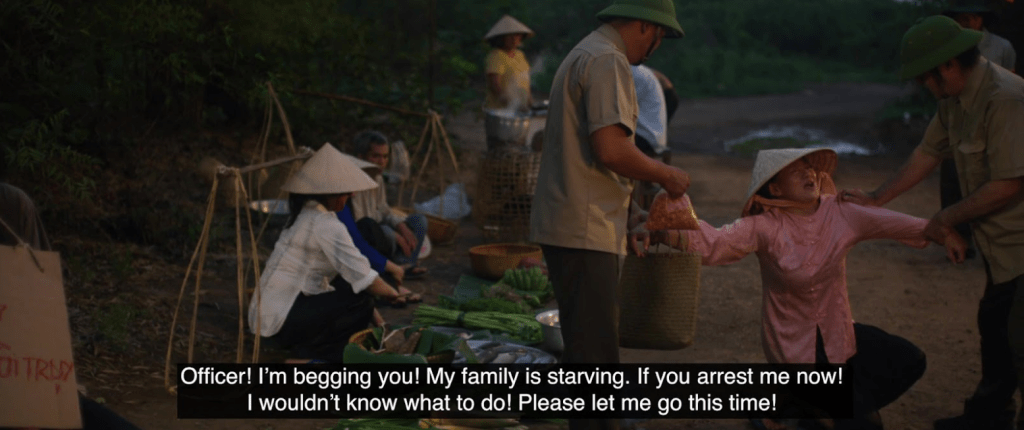
History has not been forgotten. Over the years, the boat people and their descents have come together to build monuments in cities across the world. They serve as a meaningful and lasting community space to commemorate, reflect and educate others about their journey for freedom.
As touching as the film is, Tam does not plan to stop there. It is her mission to bring her documentary to audiences around the world. She is planning to get funding from non-profit organizations to support worldwide screenings in several countries including the United States, Australia, and France, where a large portion of boat people landed and called those countries their second home.
Besides the boat people stories, Tam wants to present the history of Vietnam from another angle: “It would be great if we can make another movie about the soldiers that fought fearlessly in the Vietnam War for their beliefs. I can imagine how hard it can be as they are passing away or forgetting what they went through in the war. It would be a fight against time if we are determined to do it.“
Watch the trailer for Boat People: A 50-Year Journey
Learn more about the History of the Boat People from Senator Thanh Hai Ngo’s website.
 Phoebe Connects
Leave a comment