
If you ever visited Revue Cinema, Toronto’s oldest movie theater, chances are you bumped into Brandon Lim. From sold-out screenings of classic martial arts films, to Canadian action movies like Tiger Claws starring Jalal Merhi, Brandon is among the group of popular programmers at the Revue. He shares his passion for classic Asian and Hong Kong cinema with today’s audiences by hosting a special screening series called Black Belt Cinema.
In a post-pandemic world, reserved seating and online streaming dominate today’s movie watching habits. Movie goers have forgotten the experience of lining up with friends and having face-to-face interaction with local programmers and filmmakers. However, the Revue strives to preserve the movie culture and experience by maintaining old traditions- no reserved seats, functioning theater curtains that open and close to the correct projection format, and an actual human standing in the ticket booth. Sharing a deep love for tradition and nostalgia, Brandon talks about his relationship with movies and the cinema.
Introduction
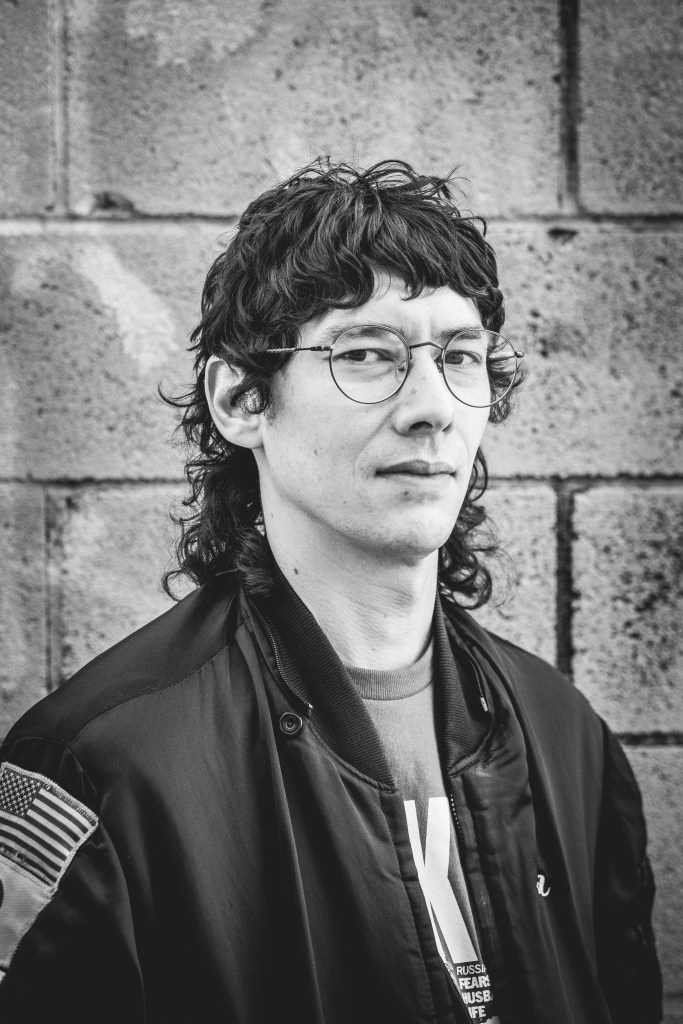
Phoebe: Introduce yourself and how do you relate to movies in your life and work?
Brandon: I’m Brandon Lim, a film programmer at Revue Cinema, Toronto’s oldest single-screen cinema. I’ve been running a series there called Black Belt Cinema since 2020. It’s a monthly movie series featuring martial arts, action, and kung fu films. Sometimes I include other Asian genre films, but it mainly focuses on classic action and martial arts movies from the ’80s, ’90s, and early 2000s.
Revue often has its programmers curate films for various themed series. For example, tonight’s screening was Chungking Express, part of the Heat Wave series, an annual summer event. Recently, I presented Brotherhood of the Wolf, a French gothic horror martial arts film, for the Full Moon’s Eve series, which is an all-day werewolf marathon they host each year—such a fun addition!
I’m a dedicated cinephile, and my passion for cinema has been a big part of my life since I was a teenager, even a kid. Besides programming, I do a lot of graphic design, especially for my brand, Fatal Stasis. We make limited runs of screen-printed t-shirts that I design, often inspired by films I present. I also design shirts for other programmers at Revue and for theaters like the Paradise on Bloor.
Favorite Director and Their Movies
Phoebe: Tell us about one of your favorite directors and their movies.
Brandon: One of my favorite Hong Kong directors is Lam Nye Choy. Unlike iconic names like John Woo, Corey Yuen, or Ringo Lam, he’s less well-known but made some remarkable, over-the-top films. His style is often described as excessive, with lots of violence, special effects, and humor. Some might call his work “lowbrow” or B-movie, but it’s very memorable. He’s probably best known for directing Riki-Oh: The Story of Ricky (1991), an action-comedy based on a Japanese manga. The story follows Ricky, a powerful man who ends up in a surreal prison, battling other inmates and ultimately facing off against the corrupt warden. It has a bit of a martial arts horror vibe and developed a huge cult following. In fact, Late Night with Conan O’Brien featured clips from it regularly, which introduced many people to the film.
Another film of his, The Cat (also known as The 1000 Years Cat), is a strange mix of children’s adventure and science fiction. It’s packed with wild special effects, body horror, and shape-shifting. The plot involves an alien that arrives in Hong Kong disguised as a black cat. Alien bounty hunters come to capture it, and a local family takes in the cat, unaware of its powers. There’s even a Hong Kong detective, played by Waise Lee, who gets involved in the story.
Revive Hong Kong Cinema
Phoebe: What inspired you to revive old Hong Kong cinema for today’s audiences, and what has the feedback been like?
Brandon: My passion for Hong Kong cinema is what inspired me to “revive” it to audiences. Growing up, I watched many Chinese-language films with my father, who’s Chinese and was born in Ipoh, Malaysia. He moved to Nova Scotia, where he met my mother, and then they moved to Toronto, where I was born in the ’80s. My dad had a lot of VHS tapes, and we would often go to Chinatown to get more. Sometimes we’d also watch Hong Kong films on TV, even if they didn’t always have English subtitles. My dad would translate for me. One of the first films he showed me was Jackie Chan’s Police Story, which I watched over and over, often fast-forwarding to the action scenes. He also introduced me to Enter the Dragon, Fist of Fury, and other classic films.
I didn’t speak Chinese, so I didn’t always understand everything, but I loved the action. As I got older, I remained interested in Hong Kong cinema, especially as more Hong Kong films started appearing on TV. Showcase, a television station directed by Cameron Bailey (who now heads the Toronto International Film Festival), would show these films late at night. That’s how I first saw Chungking Express by Wong Kar Wai. It was unlike anything I’d seen before, with vivid colors and a strong emotional vibe—different from the action-oriented films I was used to. It opened my mind to other types of cinema, especially art-house.
The response from audiences to Hong Kong films has been incredible. Every time I screen one, it’s either sold out or nearly full. One of the first Hong Kong films I showed for Black Belt Cinema was The Heroic Trio, directed by Johnnie To with action choreography by Ching Siu-tung, starring Michelle Yeoh, Anita Mui, and Maggie Cheung. When I showed it in March 2023, it was the same month Michelle Yeoh won the Academy Award for Everything Everywhere All At Once. Her win sparked new interest in Hong Kong cinema worldwide, drawing more attention not just to Hong Kong cinema but to Kung Fu and traditional martial arts as well.
In recent years, people have become more interested in MMA or newer fighting styles in films like John Wick, while traditional Chinese martial arts felt old-fashioned or impractical by comparison. But The Heroic Trio highlighted the elegance and grace of traditional martial arts, and audiences loved it. Today, whenever I select a Hong Kong film, I’m confident it’ll get a great response because Hong Kong cinema isn’t widely shown, so people appreciate the chance to experience it.
Hong Kong Cinema in America
Phoebe: Why do you think old Hong Kong movies resonate with American audiences? Can people from diverse cultural backgrounds appreciate them like Asian viewers do?
Brandon: I think some elements of Hong Kong films, especially the comedy, don’t always translate perfectly. The humor is often tied to specific cultural, religious, political, or historical references that Western audiences may not immediately recognize. But that can actually add to the entertainment, as people sometimes enjoy things they don’t fully understand because it challenges their perspective. Some viewers appreciate being taken out of their comfort zone, and cinephiles especially are always seeking new experiences in film.
In cinema, we often see familiar themes and conventions repeated, but fresh takes on those themes keep it exciting. Watching Hong Kong films, even if you don’t grasp every nuance, can be thrilling. It might be something subtle, like a character’s expression or an unusual reaction. You might not fully get it, but it still resonates, making you wonder, “Why did that happen?” and drawing you in because it’s unpredictable.
Experiencing other cultures through cinema, food, language, and art helps us connect universally through shared emotions. At the same time, the unfamiliar aspects can shock, amuse, or even confuse us. That’s all part of the experience. Cinema offers us perspectives outside our own lives, allowing us to explore the world in a new way. This broadens our understanding and enriches our view of the world.
Revue Eviction Threat
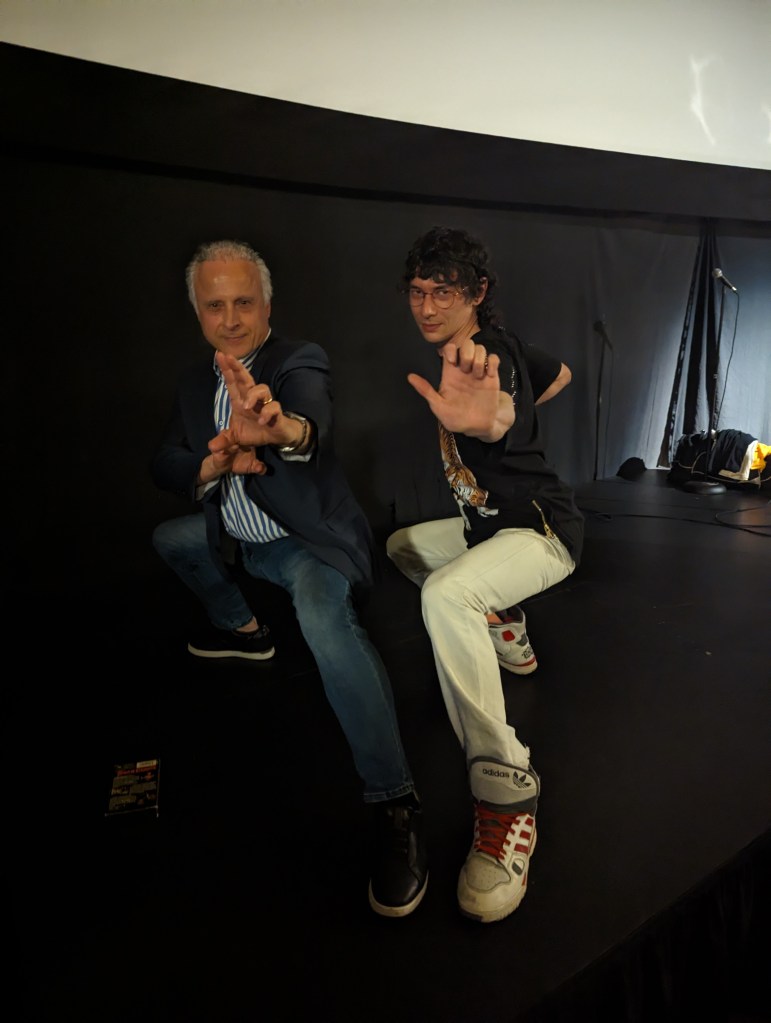
Phoebe: Why do you think people are so passionate about supporting Revue Cinema during its eviction threat?
Brandon: Since news spread that our landlord isn’t renewing our lease, the community has shown overwhelming support. He wants to remove our board, the Revue Film Society—a volunteer-run group that oversees Revue’s operations and finances. When he took over in 2007, he leased the space to the Film Society. He only owns the building, not the Revue Cinema brand. Revue Cinema exists as it does because of the Film Society, its programmers, and dedicated staff.
We’re Toronto’s oldest single-screen cinema, around since the silent film era, and we’ve weathered a lot. Many assumed this was a financial issue, but last year was our most successful year ever. So, for our landlord to try and remove a board that’s run the cinema successfully for 17 years doesn’t make sense. He has no experience running a cinema, yet thinks he can just replace the board and keep the same staff and programmers—it’s almost irrational.
The community has rallied around us because Toronto has lost so many cultural spaces over the years, and we’re unlikely to see new single-screen cinemas being built anytime soon, especially with multiplexes struggling now. People have shared stories of meeting their spouses here, going on first dates, even holding weddings at Revue. We also host private events, children’s birthday parties, and more. It’s a deeply meaningful space for so many, and the community doesn’t want to see it go.
Upcoming Film Screenings
Phoebe: What films do you plan to showcase for audiences in the future?
Brandon: I love programming films that excite audiences, especially those they’ve never seen on the big screen or may not even know about. With so many movies accessible through streaming, piracy, and video stores, it can be overwhelming to sift through everything. That’s where cinemas like Revue and film programmers come in—we guide audiences through the vast library of films out there. It’s a privilege to do this, and I try to screen movies I would enjoy seeing, but I also listen closely to what my audience wants. People often ask if we’ll show certain films, like Seven Samurai on its 70th anniversary with the new 4K restoration, and of course, I take those requests seriously. I balance popular screenings with lesser-known gems, like Lady Street Fighter.
I’d love to screen more Hong Kong cinema, but rights can be hard to secure. I’m a fan of Tsui Hark and would love to show Zu: Warriors from the Magic Mountain or The Blade, his remake of One-Armed Swordsman. I’d also enjoy screening more Bruce Lee films. Enter the Dragon is shown fairly often, but I’d like to bring The Way of the Dragon, his Rome-set film with Chuck Norris, to the big screen. My focus tends to be on films from the ’70s, ’80s, and ’90s, but I’d like to screen more recent films, too, like The Raid or Kill Bill.
Japanese cinema is also a passion. The first film I ever screened was The Tale of Zatoichi, the start of the classic series about the blind swordsman. I’d love to show more samurai films and action movies that defined the ’90s and 2000s, like The Transporter with Jason Statham or Jet Li’s Hollywood films, such as Romeo Must Die.
 Phoebe Connects
Leave a comment